Center Theatre Group: L.A.’s Theatre Company
Legacy Project
James McNamara, with his team, managed the research and created the brand strategy and naming consultation, organization tagline, nomenclature, and brand architecture for the Center Theatre Group while he was Managing Director, Strategy and Branding at LaPlaca Cohen.
Current Situation
When a cultural organization launches a first-time brand strategy and visual identity such as this, the initiative can become a launchpad for a future evolution of strategy and identity.
This was the result for the Center Theatre Group, which changed its visual identity for its 50th anniversary, building off the comprehensive foundation that this original branding project achieved.
Changes in the Los Angeles arts scene, CTG artistic and executive management, the CTG’s theatres and their use, brand architecture, and education programs, all necessitated updates to how CTG spoke about itself and looked in a new cultural environment.

Original Situation
Founded in 1967, Center Theatre Group (originally including the Ahmanson Theatre and Mark Taper Forum, adding the Kirk Douglas Theatre in 2004) is one of the nation’s largest and most influential not-for-profit theatre companies, and the most pre-eminent theatre company on the U.S. West Coast.
Usually, projects like this arise from marketing and communications departments. Uniquely, this one arose from CTG’s development department. They had the problem that donors thought they were giving to the individual theatres (some even thought they were giving to The Music Center). They saw CTG as an operational umbrella for the theatres, not as the mission-fulfilling, artistic director, and producer for all three theatres. Development wanted donors to know they were giving to CTG. The problem was that CTG marketing and communications had always promoted the individual theatres, each with a well-honed genre focus. CTG was always in the background, if at all, in promotion.
Complicating the issue, and understandably so, some thought the Ahmanson and Taper, located within The Music Center, downtown L.A.’s seminal performing arts center, were also owned by The Music Center.
Also, given that Los Angeles is a for-profit entertainment-saturated city, a significant number of potential donors and audiences did not know that CTG is a non-profit.
Despite the strength and quality of its productions and some knowledge of CTG, the name didn’t work hard enough to generate donor and audience interest or communicate the umbrella brand that CTG wanted.
CTG wanted to shift audience perceptions away from confusion with its theatres and towards the CTG itself as the creative force behind productions, an important distinction for the success of donor recruitment and retention.
Strategy
James and his team created and executed a comprehensive strategic initiative to assess CTG’s strengths and differentiating characteristics, which served as the basis to create a brand strategy and visual identity.
Extensive qualitative (internal management and external stakeholder interviews, and focus groups) and quantitative research (survey) found that, as expected, the theatres were well-known and CTG was not known enough by potential donors of various levels.
Naming Issues. Nothing about the name “Center Theatre Group” is unique, ownable, or differentiating. We recommended that CTG change its name to “Los Angeles Theatre Company.” It’s pre-eminent, place-focused, and ownable. CTG reasoned that since they had never promoted the CTG name, they would start there, rather than with a new name. We then recommended that CTG use “L.A.’s Theatre Company” as its tagline, which they accepted. The tagline communicates the desired attributes of leadership, community-embedded, and authority.
We also created a nomenclature system that clearly defines CTG as the presenter, distinct from its theatre names and locations.
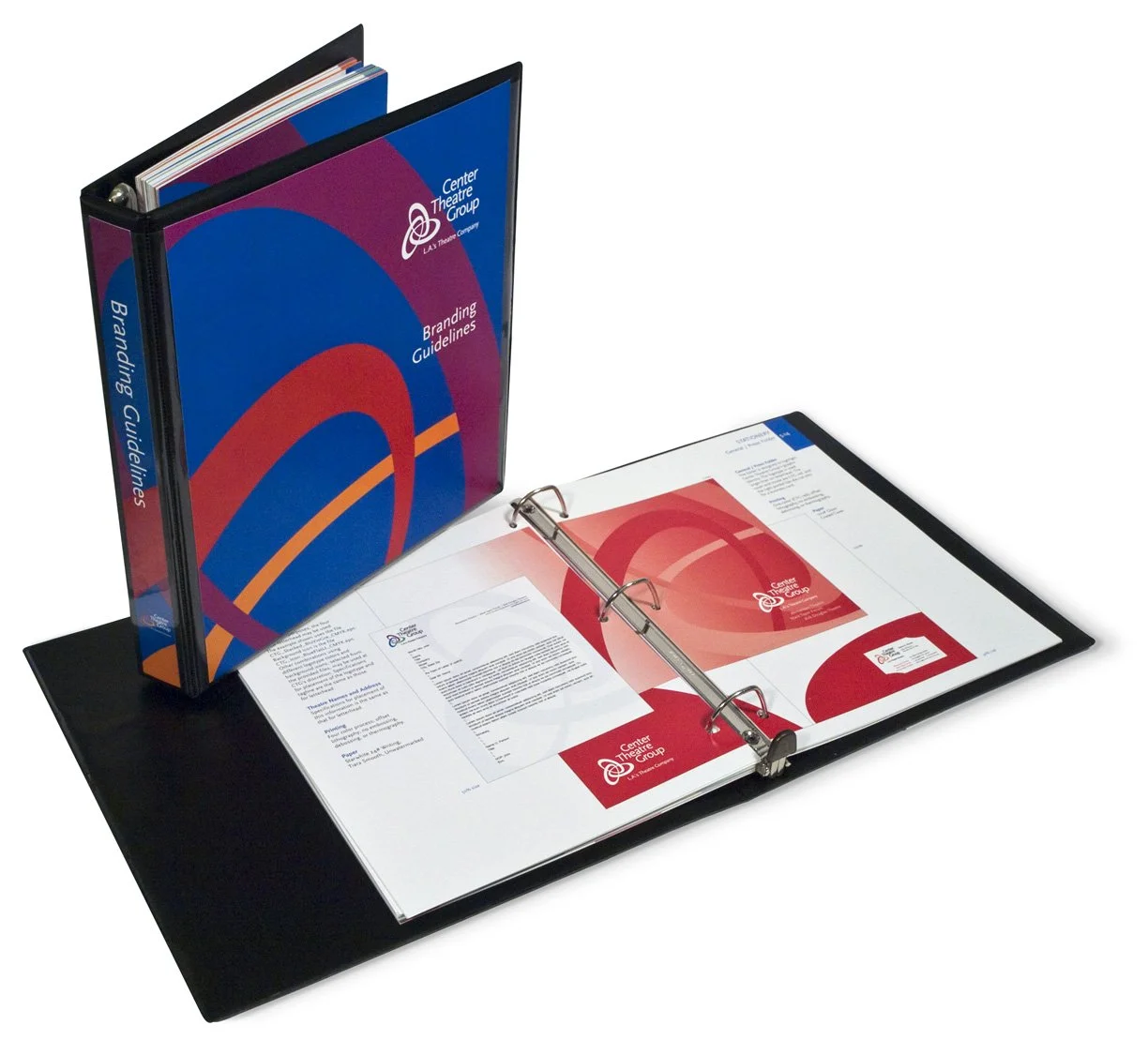
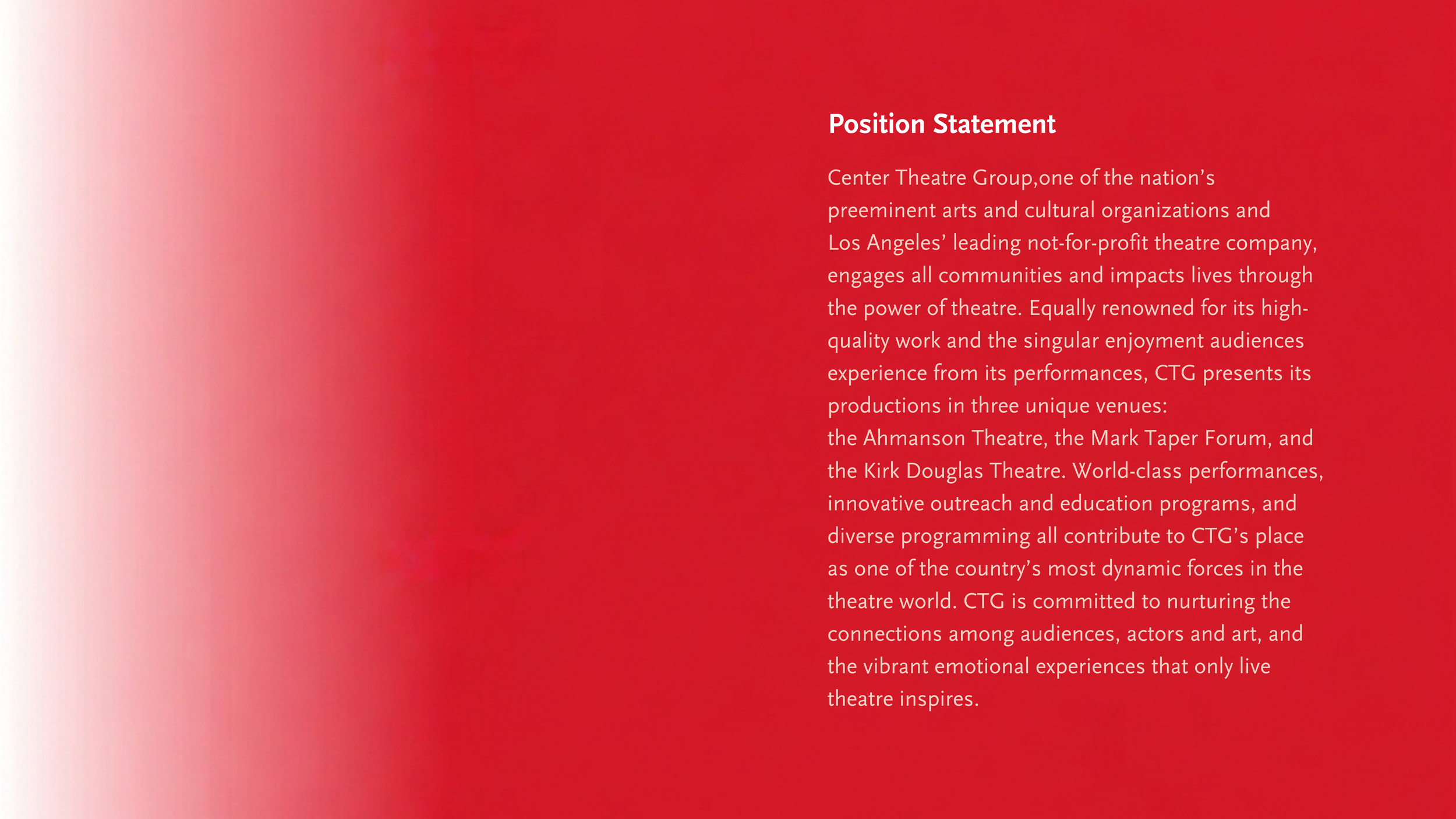
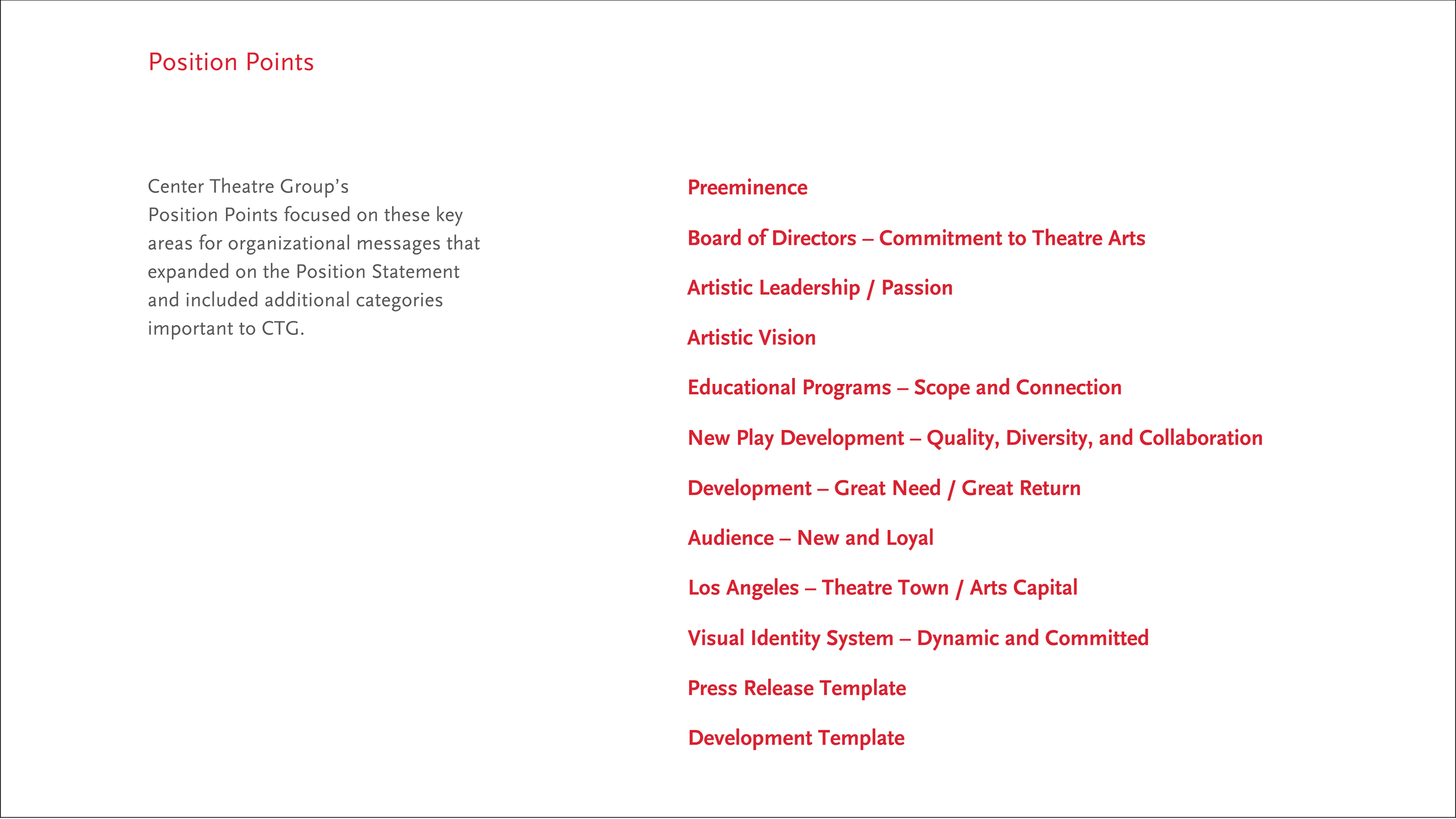
We then created a Position Statement, Position Points, and Writing Style guidelines that articulated and formed the foundation of CTG’s new Branding Strategy.
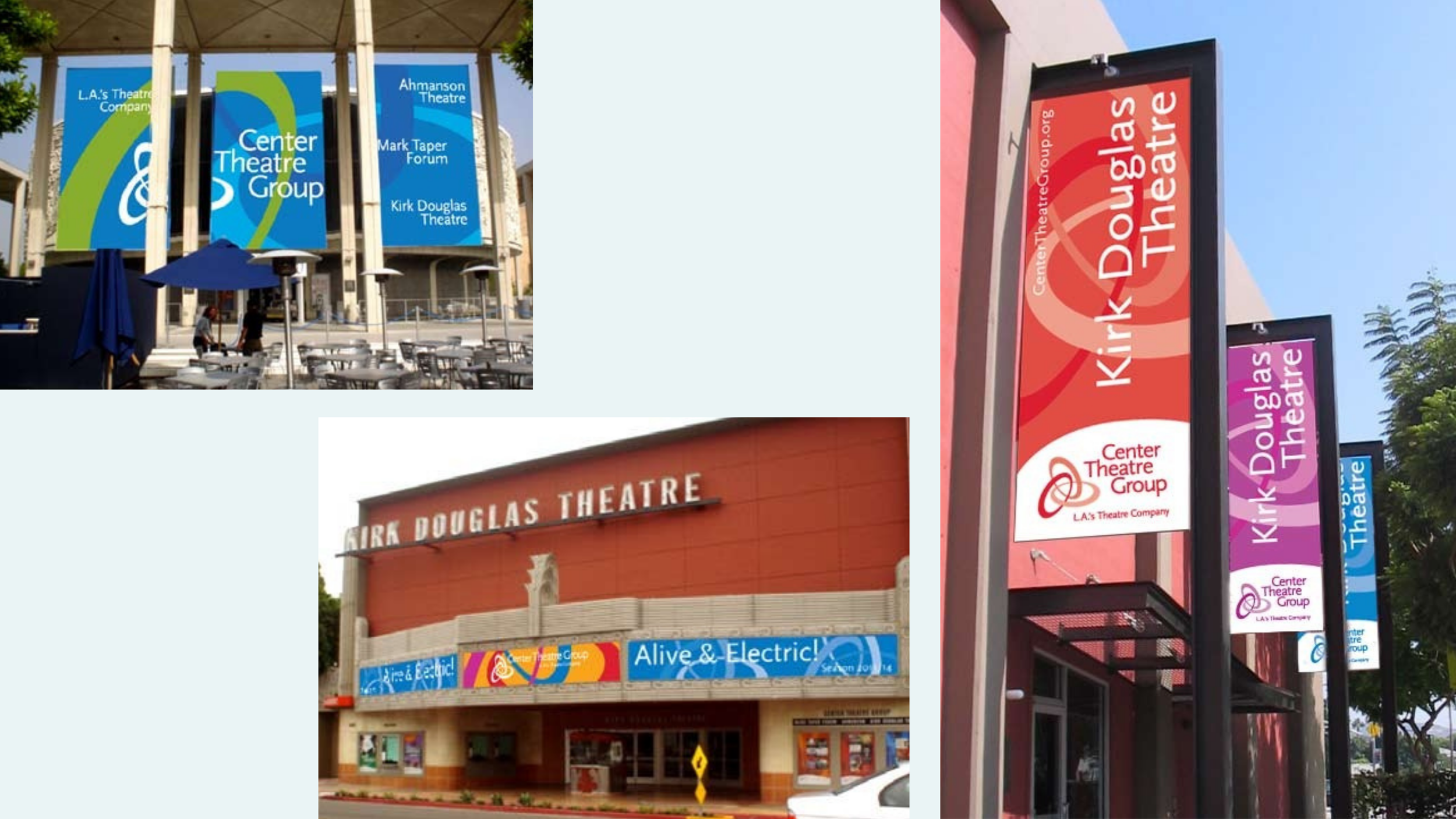
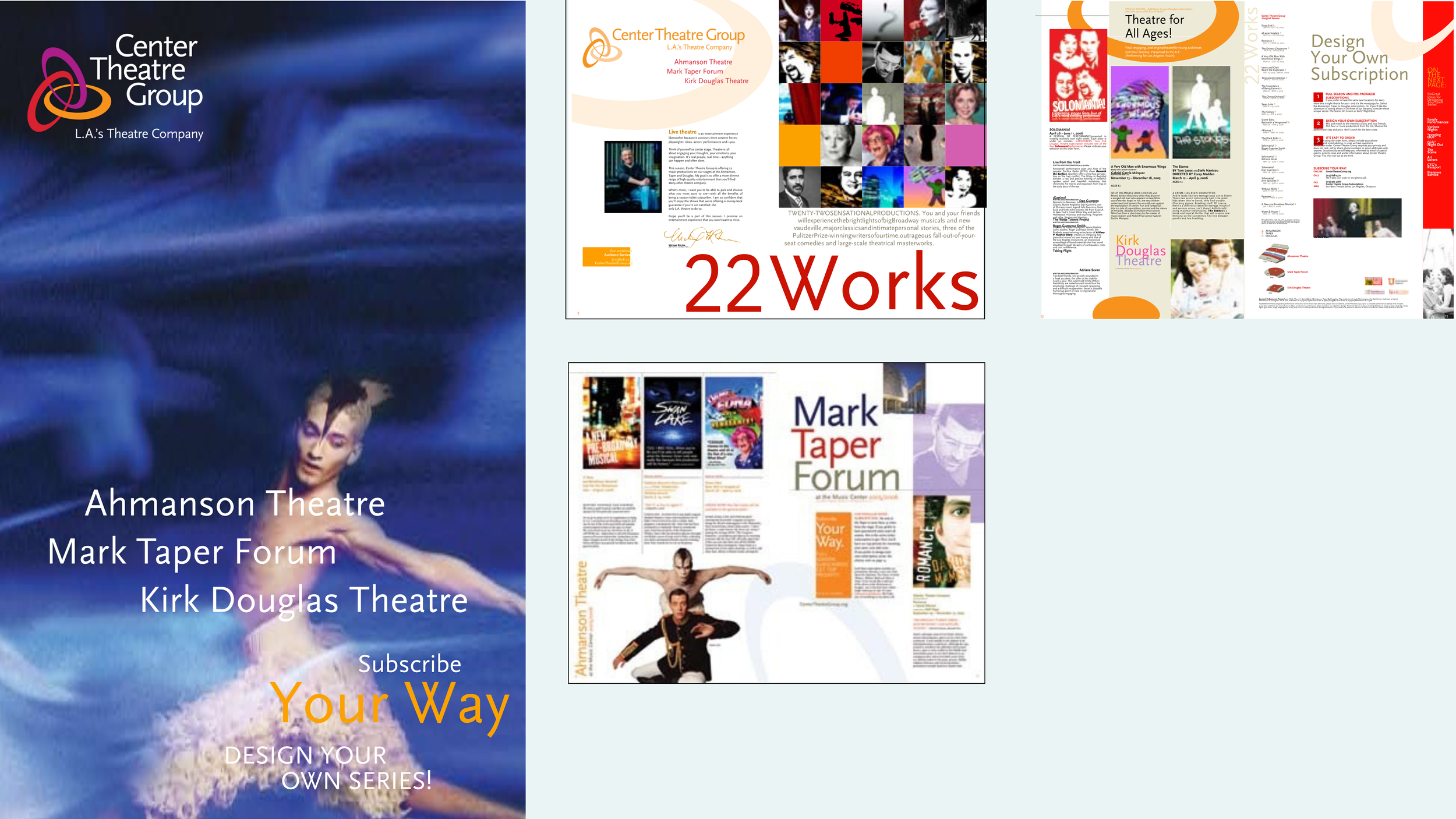
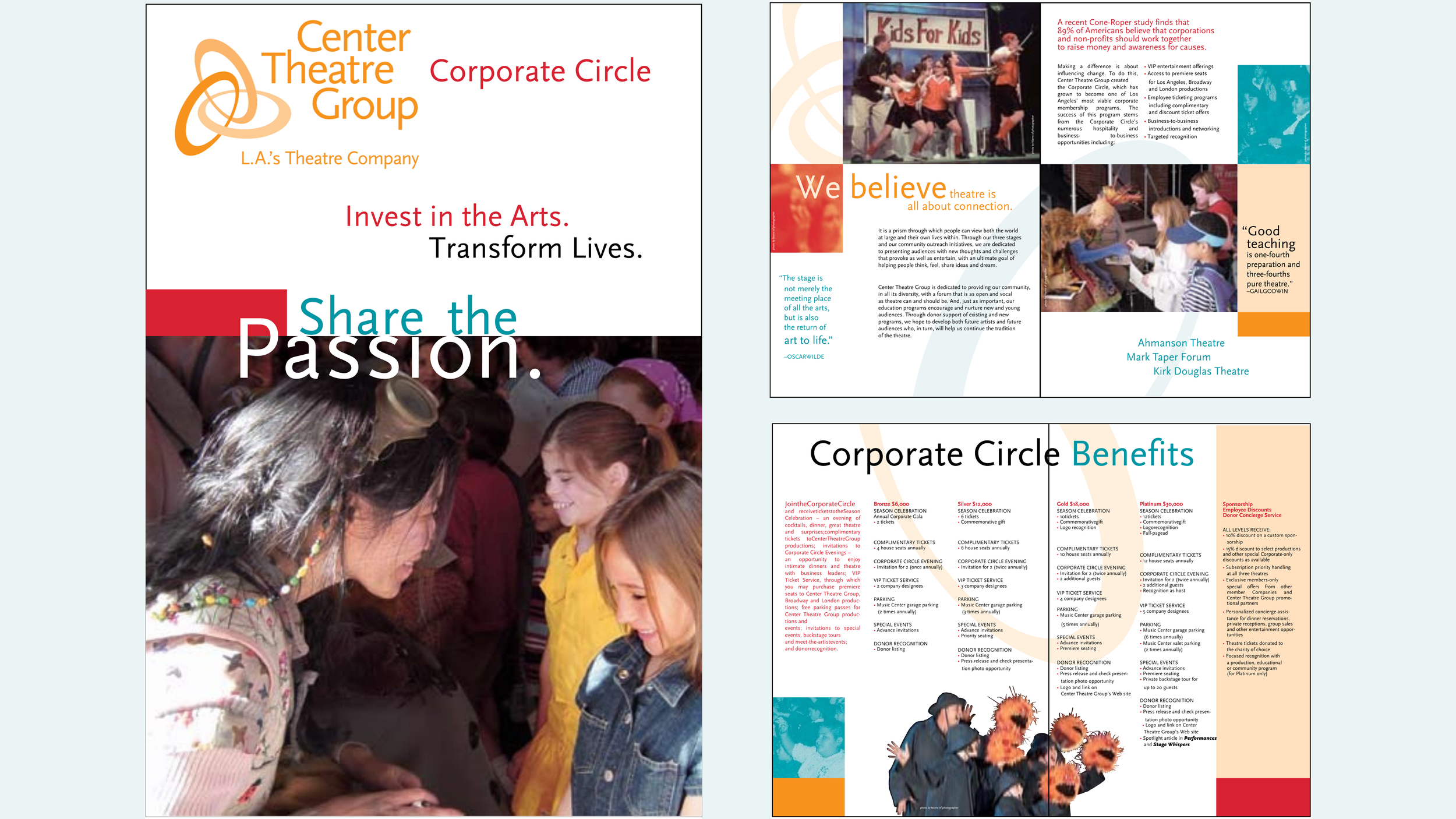
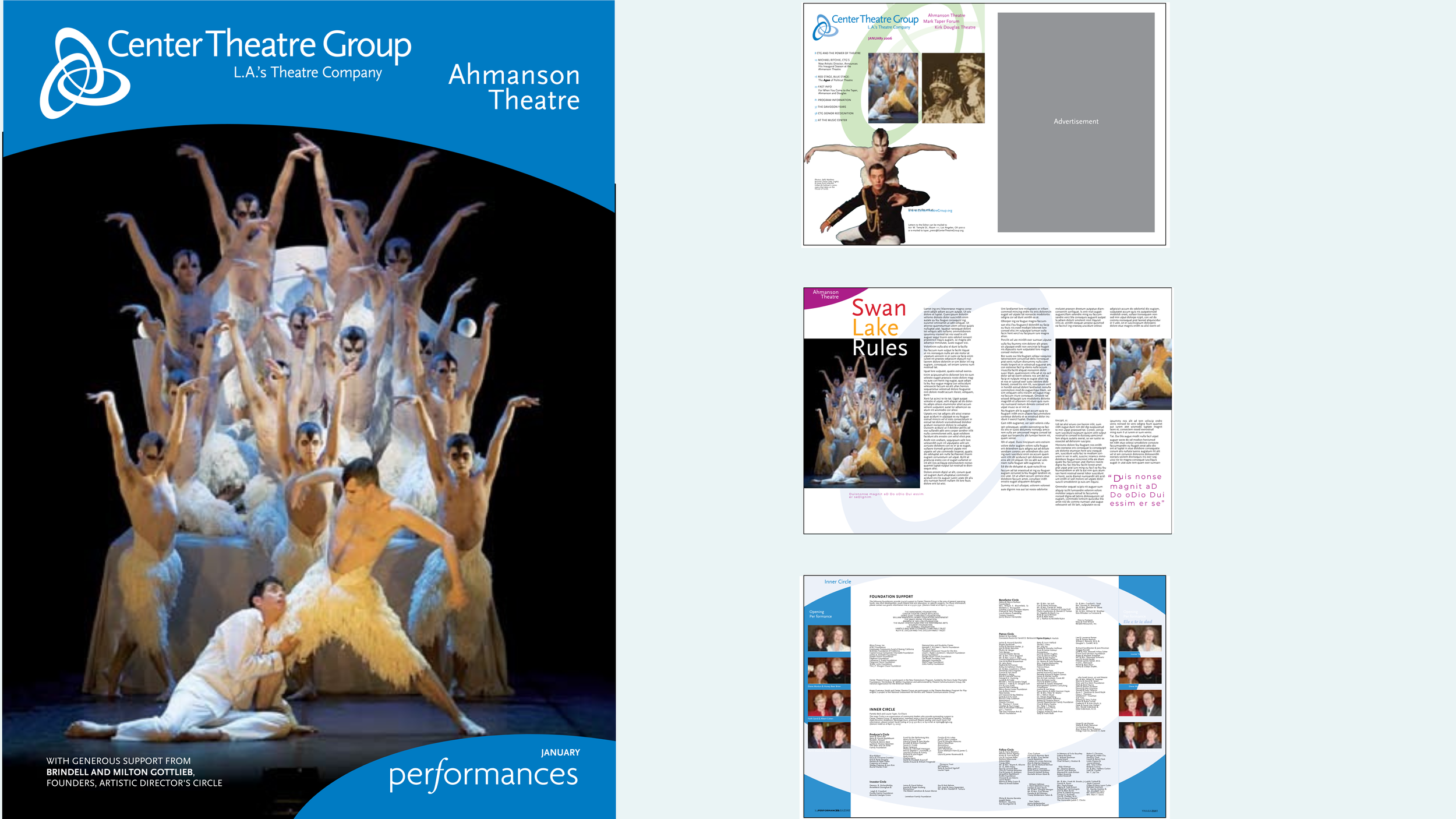
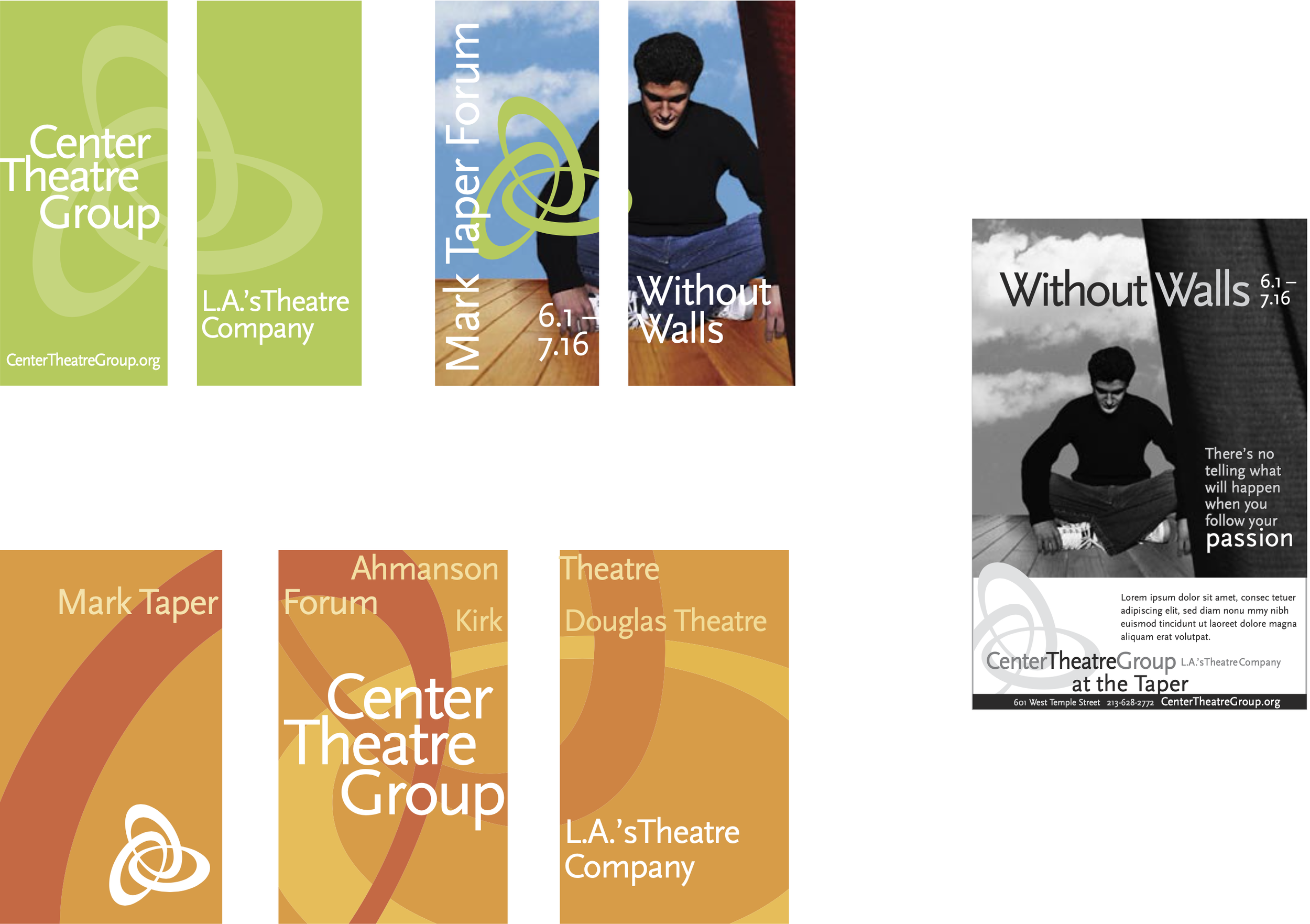
Ultimately, to support the brand strategy graphically, we created a visual identity, including a logo based on CTG’s three theatres as spotlights, recommended typefaces, and a primary and secondary color palette, as well as designs for digital ads, a digital stationery system, and print communications materials, including outdoor banners and posters; and marketing, development, and education brochures, pamphlets, postcards, and advertising.
Benefit
Center Theatre Group now had a formalized positioning, a new tagline, and a hierarchical nomenclature system.
Its new, vibrant, theatrical, and dynamic visual identity put the CTG name front and center. The project provided CTG with a comprehensive visual identity that easily scaled to all digital and print uses.
The visual identity brought together CTG’s name and its theatre names into a visually cohesive family, enabling it to showcase expanded programming while making it clear that CTG owns, manages, and programs its Ahmanson Theatre, Mark Taper Forum, and Kirk Douglas Theatre
CTG was now ready to welcome its new artistic director, only the second one in its history at that time, and signal through its visual identity that exciting change was progressing in the organization.
A season-opening campaign featuring transit, print, and digital ads helped launch the new CTG to some, and a refreshed one to others, in a way that was bold, clear, and defining.
Result
The Los Angeles Times reported that, “[The new artistic director] hopes to unite the wings of Center Theatre Group more closely under the CTG label in the public mind. ‘I was told there are Taper plays, Taper audiences, Ahmanson audiences,’ he said. ‘I was adamant that we should start making CTG audiences, CTG productions. The less we define the venues, the better off we’ll be.’ ”
The new artistic director embraced this single-brand initiative that began when he did, and the CTG-first emphasis lasted for many years. For CTG’s 50th anniversary, they put the theatre names on par with the CTG name. Since then, CTG has once again reduced its emphasis on the theatres and returned to a CTG-centric hierarchy and brand emphasis.
Notably, CTG has embraced a one-subscription offering, rather than 3 separate subscriptions, one for each theatre. This new approach to subscribers CTG calls “One CTG. One LA, unifying programming at CTG’s three iconic spaces . . . in one comprehensive season.” Now, a subscriber can select shows from any of the three CTG theatres. Truly a remarkable change after 50 years, born of current theatre economics, shifting entertainment priorities, and audiences who wanted more choice among CTG’s theatres.